
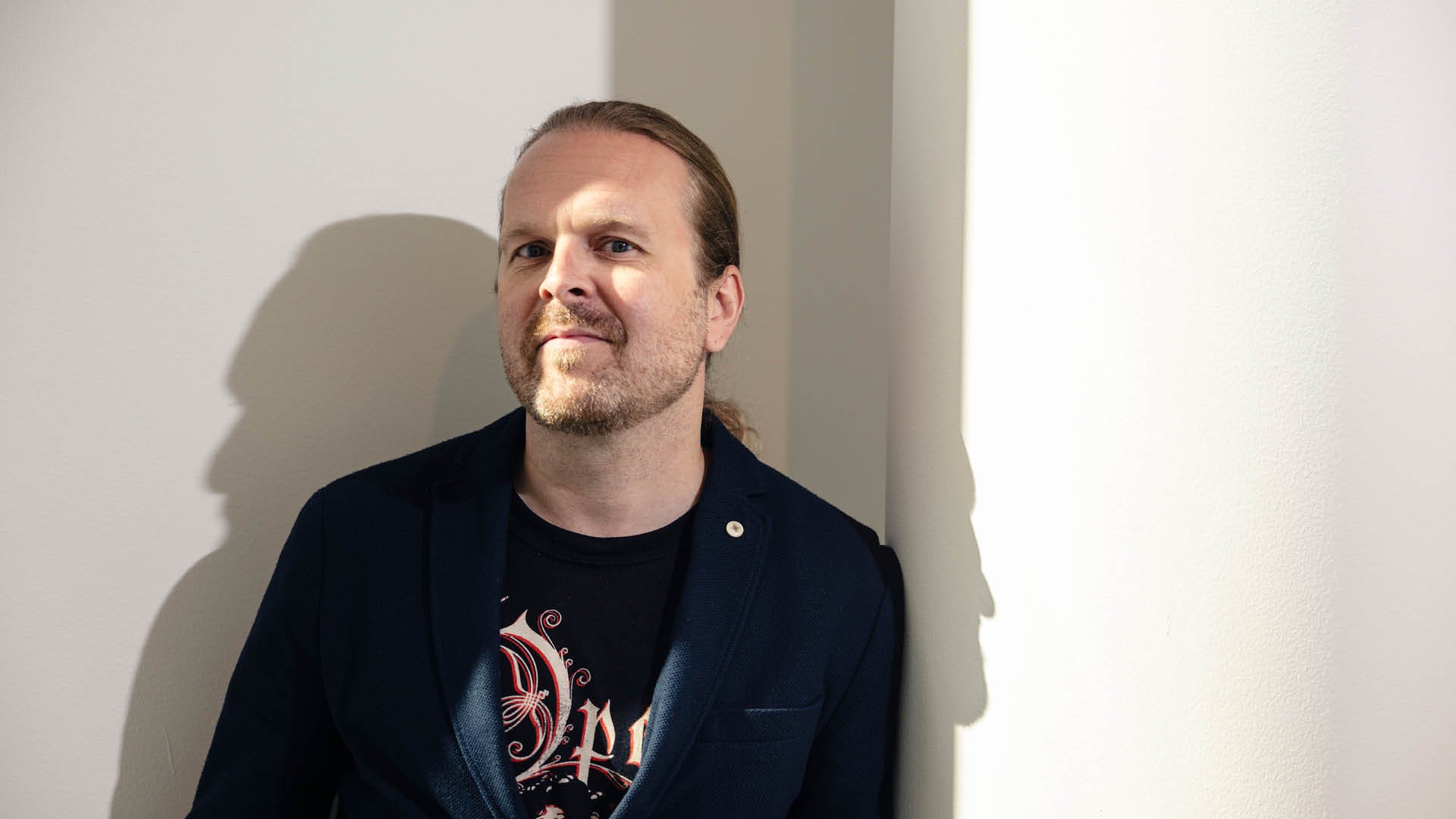
Ville helps ordinary investors build their wealth
More about the topic
A professional portfolio manager is able to make slightly better decisions on average than other investors. How?
When the market is stormy, a portfolio manager needs to keep a cool head. US tariffs sent the market into a downward spiral in early April.
For example, the Dow Jones index, which tracks the share price development of 30 major US companies, plummeted by almost ten per cent in a couple of days. Cyclical stocks in particular fell as investors worried about a possible economic slowdown.
Cyclical stocks refer to stocks whose value fluctuates according to economic cycles. In an upswing, when the economy is growing and people generally have more money, more companies' products and services are purchased, so the value of shares increases. In a recession, on the other hand, demand for products and services decreases, and the value of shares may decline.
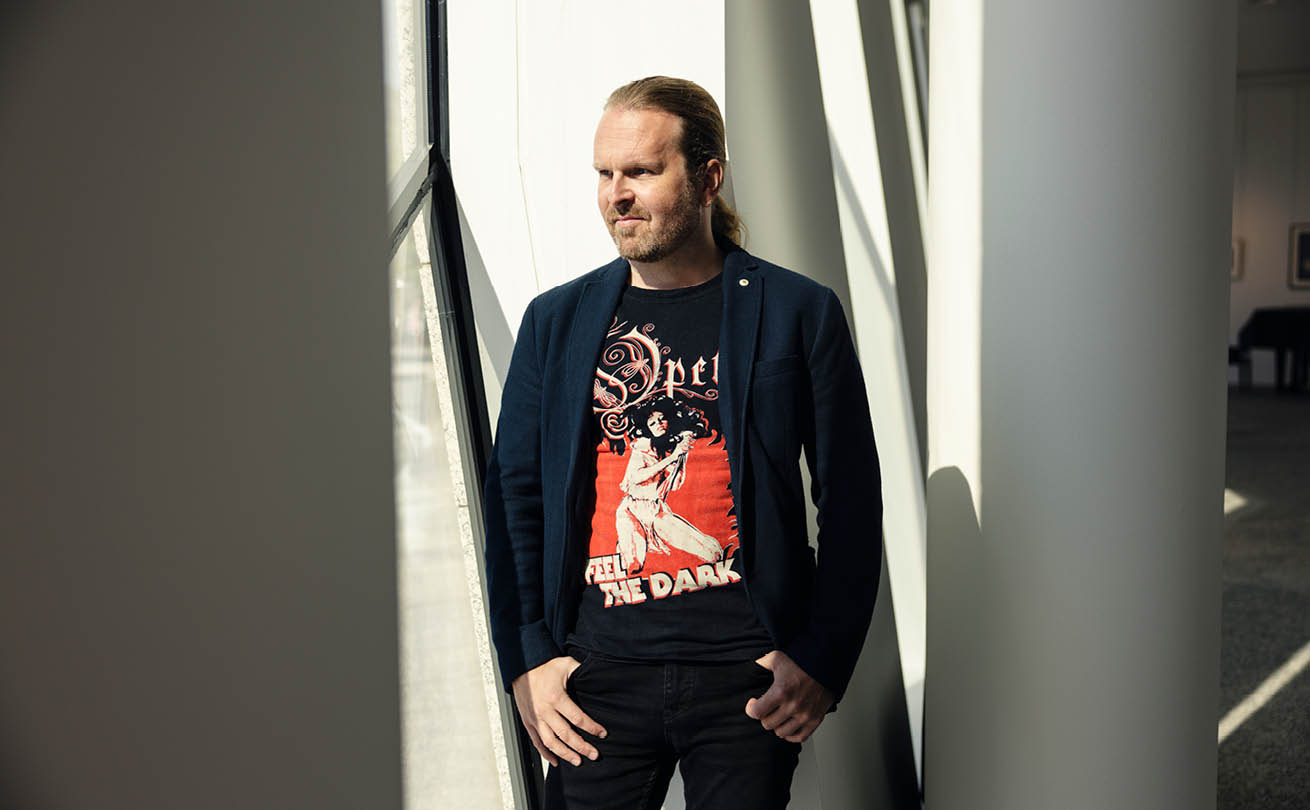
"Despite the turbulence, we dared to buy cyclical stocks for our funds. It was a good decision," says Ville Pekkala, portfolio manager of OP Asset Management's saver's funds.
That is true. Less than a week later, the United States granted a 90-day break for tariffs. Stock prices recovered.
By the end of June, the Dow Jones index had risen higher than it had been before the tariffs imposed by President Donald Trump.
"We achieved good returns from, for example, cyclical stocks and technology stocks.
Saver's funds – an easy option even for new investors
More than 300,000 investors in Finland have invested their funds in low-risk and responsible saver's funds. They are generally well suited for new investors who do not want or have time to monitor the markets daily.
However, investing always involves risks, as the value of an individual investment instrument increases and decreases in accordance with developments in the market, and past performance should not be seen as an indication of future performance.
Saver's funds have three risk levels: conservative, moderate and brave.
- OP-Conservative typically keeps approximately 20% of its investments in equities and 80% in fixed income, so the risk is lower.
- OP-Moderate typically divides investments evenly, 50% in equities and 50% in fixed income.
- OP-Brave typically invests approximately 80% in equities and 20% in fixed income, which means that the return potential and risk are higher.
Pekkala actively manages saver’s funds based on a professional investment strategy.
We have now increased the weight of Finnish stocks.
"For example, we have kept Finnish stocks underweight, and for the last three years Finland has been a really weak market."
An underweight portfolio contains fewer Finnish stocks than normal.
Many investors and portfolio managers have a domestic market distortion in their portfolios, where domestic stocks are overweighted – often due to their familiarity.
"We have now increased the weight of Finnish stocks."
Long-term interest rates, such as 10-year government bonds, have long been a safe haven for investors, but rising inflation is reducing their value as investments. Saver’s funds woke up to inflationary pressures early and underweighted long-term interest rates in a timely manner.
In a recession, corporate profits and growth prospects weaken, which usually leads to a decline in stock prices. Even though fears of recession have been fuelled in recent years, saver’s funds have still kept stocks overweight most of the time.
All of the above examples have proven to be good decisions and have increased the wealth of investors in saver's funds.
Information is sought from many sources
According to Pekkala, the characteristics of a good portfolio manager are consistency and perseverance. The most important thing is to be able to make slightly better decisions than others on average – and more good decisions than bad ones. It's already a big step in the right direction.
The workdays are varied and intense. Pekkala spends the morning reading reports and analyses that came in during the night.
"Meetings usually don't start until nine, so I have three hours to leisurely review the nightly events in the world's markets."
In investment decisions, Pekkala's most important source of information is the Bloomberg terminal. It provides comprehensive information on, for example, world stock markets, stock prices, interest rates in different countries, and macroeconomic indicators, such as industry and service sector statistics.
"The costs of the Bloomberg terminal are so high that few private investors are willing to pay for it."
Other sources of information for Pekkala include analyses by investment banks, reports by investment managers, and independent research institutes.
A portfolio manager knows the important things to focus on.
"X (formerly Twitter) is really good for quickly finding information, especially when travelling. If something happens in the market, I often see it there first," says Pekkala.
There is a lot of information available. Therefore, managing the amount of information is important when making investment decisions.
"No one has time to read all the information on the market." A portfolio manager must know the important things to focus on.
At OP, asset management is teamwork
At OP Asset Management, investment decisions are made by a team of experts.
Ville Pekkala works as the head of equity strategy in the team. Other team members focus on fixed income and alternative investment strategies.
For investment decisions, the team considers the following factors, among others:
- Are we overweight or underweight in equities and fixed income?
- In which countries or regions will we invest?
- In which sectors or industries will we invest?
- How do macroeconomics, geopolitical events and tax policy affect investment decisions?
- How are exchange rates, inflation and central bank decisions taken into account?
In his work, Pekkala emphasises continuous learning and renewal, because the investment market is changing rapidly and old methods become obsolete.
"There are no routine days in this job. Saving and investing are great things that promote Finnish wellbeing and prosperity. I feel that they play a significant role in promoting the wellbeing of the people," says Pekkala.
Published in September 2025, the original version of this article was in Finnish.
This is an advertisement. OP's funds are managed by OP Fund Management Company Ltd, which is a fund management company and alternative investment fund manager licensed by the Finnish Financial Supervisory Authority. The portfolio manager of OP's funds is the portfolio management company specified in the fund prospectus for OP funds.
Investing always involves risks. The value of investments can rise and fall, and an investor can lose part or all of the invested money. If the mutual fund is marketed outside Finland, OP Fund Management Company Ltd may decide to end such marketing. Before making an investment decision, take all the characteristics or objectives of the mutual fund into consideration, as described in the funds prospectus for OP funds and other documents related to the mutual fund.
Before you make any final investment decision, look through the fund's Key Information Document, the funds prospectus and fund rules. The main risks associated with mutual funds can be found in the Key Information Documents, and a more detailed list of risks is presented in the funds prospectus. The Key Information Documents and fund rules are available from the Asset Manager and website (https://www.op.fi/en/private-customers/savings-and-investments/funds/all-funds). The fund prospectus and a summary of investors' rights in funds are available on OP's website (https://www.op.fi/en/private-customers/savings-and-investments/funds/ops-fund-publications). The documents are available in Finnish, Swedish and English. Investment services are provided by OP cooperative banks.