
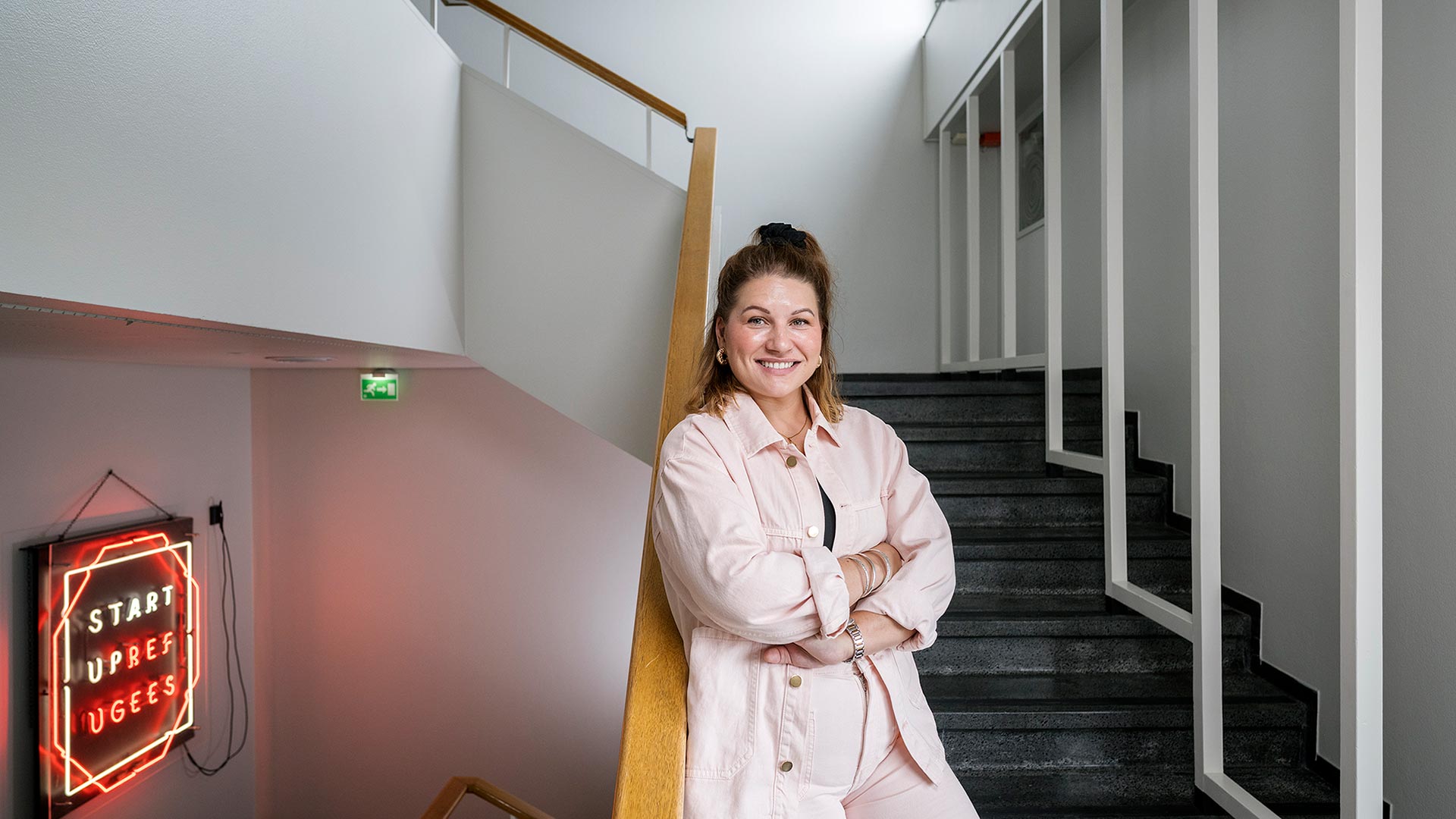
Aicha Manai and Startup Refugees help newcomers to find their calling
More about the topic
Finland is facing the most culturally diverse generation we have seen. Startup Refugees helps to integrate the newcomers into Finnish society.
Startup Refugees was born in the aftermath of the Arab Spring. Finland witnessed a growing number of newcomers unlike before. Unprecedented events required unprecedented measures.
The situation called for incubators thinking outside the box. Riku Rantala and Tunna Milonoff, hugely popular due to their travel TV show “Madventures”, started to encourage companies to utilize the skills and potential of newcomers for common good.
That initiative hit the nerve. In no time, hundreds of businesses, big and small, wanted to get involved making it possible for volunteer-based work to become structured.
Startup Refugees, a non-profit organization supporting refugees, asylum seekers and other migrants in employment and entrepreneurship was officially launched in 2016.
Next to entrepreneurship training and employment services it also offers information on Finnish labour laws and practices with all their regulations and obligations. Most concretely, newcomers are given advice on marketing or creating a curriculum vitae, even how to prepare for job interviews.
And since modern work life demands networking, Startup Refugees has opened a special tool called Match, a two-way street for newbies presenting their skills and companies looking for talent.
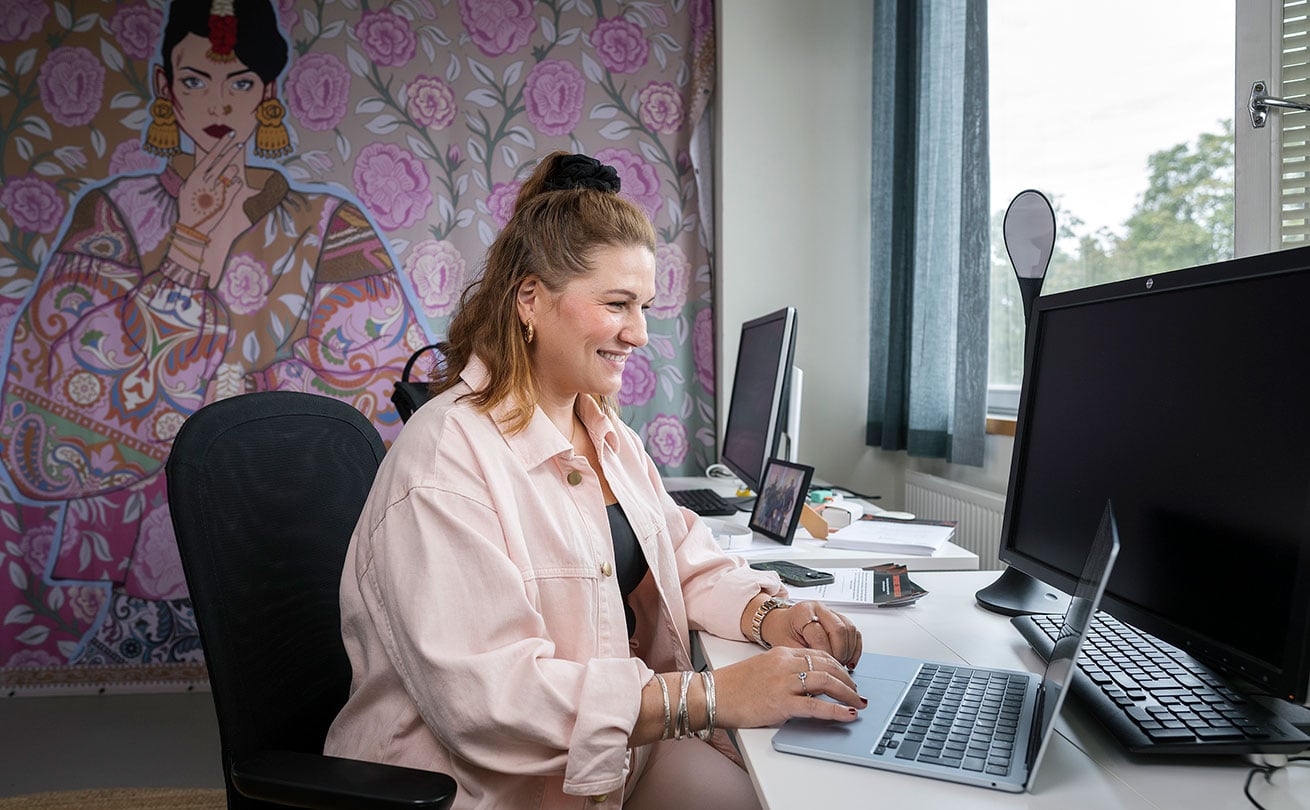 Aicha Manai has been the CEO of Startup Refugee since 2023.
No less than the future of Finland
The driving force behind Startup Refugees is not charity but cold facts.
– Already some 11 per cent of people in this country do not speak Finnish as their native language. The most culturally diverse generation Finland has seen is growing up. The only way to integrate the newly arrived into society is to ease their path to labour market – whether that would mean setting up a business or getting employed, says Aicha Manai, the CEO of Startup Refugees.
Some say that the vast majority of newcomers wish to rely on benefits to which they are entitled instead of earning their living. Manai remains adamant: Running one’s own business or a job gives pride and purpose.
Success breeds success.
Efforts have not gone to waste. So far Startup Refugees has trained up to 1,300 future entrepreneurs and contributed to some 2,500 newcomers’ employment in the open job market.
According to Manai, it is a self-feeding process. Success breeds success.
Generally, the employment rate of immigrant women is much lower compared to native Finnish women, but in entrepreneurship, they are already on equal footing.
Approximately half of the participants in Startup Refugees' entrepreneurship courses are now women, and their involvement is steadily growing.
– After hiring a newcomer, companies quite often realize it was a smart move business-wise. Then they approach us and are eager to have more non-Finnish speaking people on their payroll. That first experience alters the mindset and opens up the gates, Manai paints the picture.
Inclusion has saved roughly 4 M € per year in social security expenses.
She underlines that Startup Refugees’ employment services are free of charge to all parties involved.
From the society’s point of view, inclusion has saved roughly four million euros per year in government-provided social security expenses.
However, more could be achieved. Roadblocks still exist, especially when it comes to language. Her recipe is simple: allow people to jump right in.
– We cannot afford people sitting at school for five years learning Finnish. Language improves best in conjunction with work. Maybe job descriptions could be tailored so that perfect Finnish is not required? Applicants with a foreign surname deserve to be heard and refugee-owned businesses should not be overlooked when tenders are invited, Manai says.
Encouraging signs on the company front
Society is becoming more heterogeneous, and that means growing demand for novel services and commodities. That is partly met by those around 150 companies registered since the launch of Startup Refugees. Many of them utilize technological solutions.
To name a few, Elena Arrola and her company Chameleo have come up with an application aiming to “engineer empathy across borders”. Users are able to compare and explore cultural differences on a global scale.
Another recently migrant-founded firm, MunKamu offers care services and stimulatory activities for elderly citizens in Northern Ostrobothnia.
Founded by its Japanese and Australian owners, Zestii is a hybrid company marrying a coffee shop and catering. As a marketplace it creates opportunities for home cooks to bring their food to customers.
Award for the best business idea
To boost refugee and migrant entrepreneurs, Startup Refugees has presented an award since 2022. Receivers vary from those just in the beginning of the journey but with a scalable business idea to those needing support to go one step further.
– This year the emphasis is on women, for an obvious reason. In Finland, some 33 per cent of entrepreneurs are women. However, they receive only 6 per cent of startup funding. The application period for the award is currently underway, Aicha Manai reminds us.